The library
Hire and document
Prepare a clear brief and compare a written scope.
 An evidence file
Keep the finding, work and limitations together
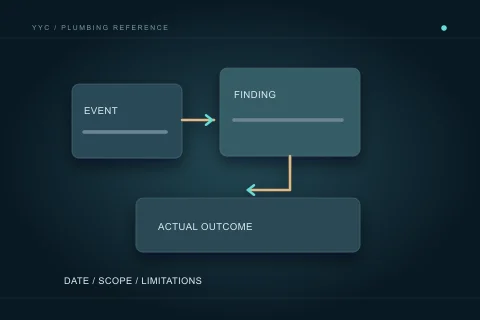
A useful service record explains the condition reviewed, work performed and limits of that review. An invoice total or photograph of a finished room cannot establish those details alone. Collect records while the work is fresh, especially before routes disappear behind finishes. Keep sensitive account and access information private. The aim is a file that helps the next qualified reviewer understand the property without repeating uncertain assumptions.
 A useful request
Write the facts and the next decision you need
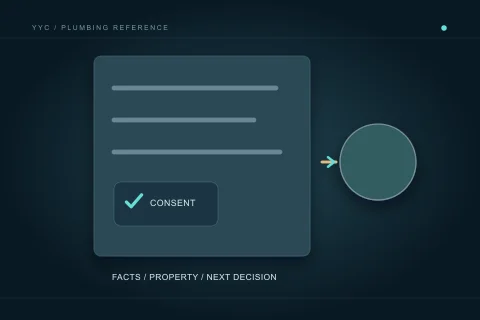
A good plumbing request lets a person understand what is happening and which decision you need help preparing. It does not require you to identify a hidden defect, choose parts or make technical adjustments. Begin with urgency and factual observations, then add property context and work already done. YYCPlumber is a reference and human-reviewed request service, not the contractor, an emergency dispatcher or a guarantee of response.
 Hiring with evidence
Check qualifications and agreement details before booking work
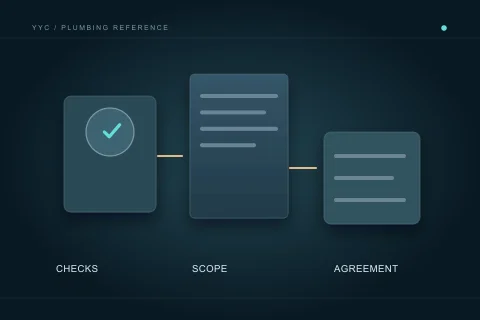
Choosing a plumber is partly a qualification check and partly a scope decision. A familiar name, directory listing or attractive website does not establish that the proposed service fits the problem. Verify relevant information and ask for a clear deliverable. YYCPlumber is a reference and request service, not a contractor or a claim that every listed or responding business has been vetted.
 Proposal review
Make the amount meaningful by checking the scope
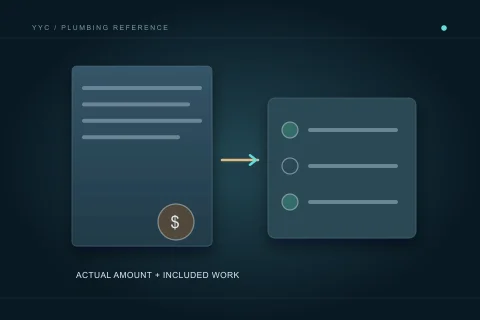
A quotation is useful when you can tell what work and responsibility the amount buys. Two proposals may differ because one includes assessment, access or restoration and another does not. Start with the same factual brief and compare the written deliverables. The worksheet records your supplied amount and unresolved scope details; it does not invent prices, rank businesses or approve a contract.
 Scope changes
Approve the changed work with its full consequences visible
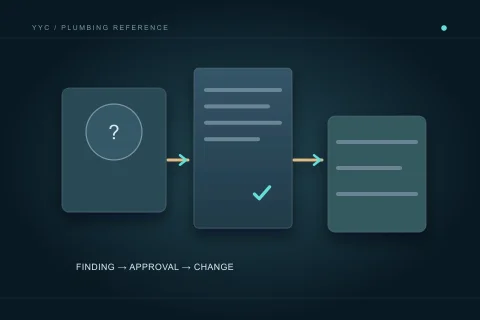
A discovery behind a wall or a changed product can justify a new decision, but it should not disappear into an unexplained invoice. A useful change record links the finding to the proposed work and its effects on access, approvals, restoration, price and timing. The owner approves the commercial scope while qualified parties determine technical requirements. Use clear written decisions rather than treat every unknown as unlimited authorization.
 A defined decision
Ask what each option is intended to resolve
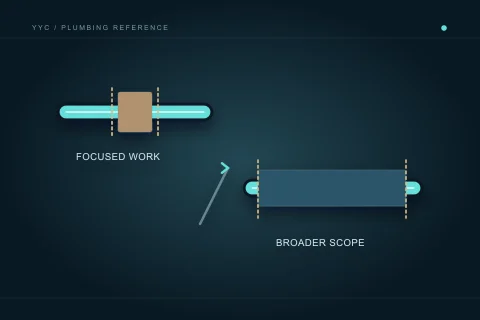
Repair and replacement are useful options only when their scope and rationale are clear. A recurring symptom, older product or frustrated owner does not by itself establish the correct boundary. Ask for findings, alternatives and the effect of each option on access, approvals and future maintenance. Compare actual written proposals without invented job-price ranges or claims that one approach is always superior.
No matching articles. Try a broader symptom, room or project term.
Turn the details into a clear request.
Describe the location, symptoms or proposed work. A person reviews the brief; any referral or contractor arrangement is a separate step with your agreement.