Make sure the proposal answers the current brief
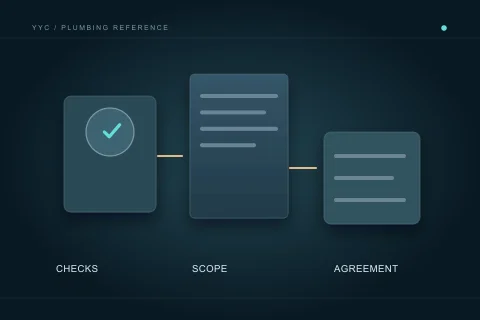
Match the property, symptom or planned work, affected fixtures and recent history to the proposal. If the contractor priced a different objective, clarify it before comparing totals. A repair request, product upgrade and whole-room renovation can share a fixture name but have different work. Keep current drawings and selected models consistent across the proposals.
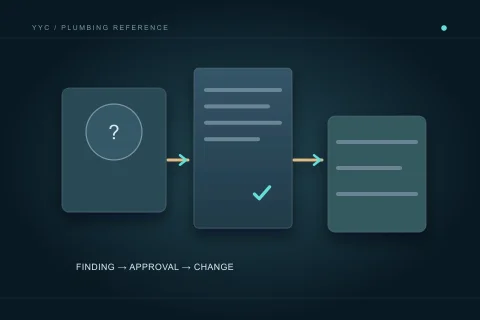
Mark unknown existing conditions and ask what assessment is included before a fixed recommendation. A statement such as “leak repair” should identify the observed issue and proposed boundary as far as established. Do not require a contractor to promise concealed conditions are known, but do require an understandable process for reporting findings and approving changed scope.
Read the included and retained work together
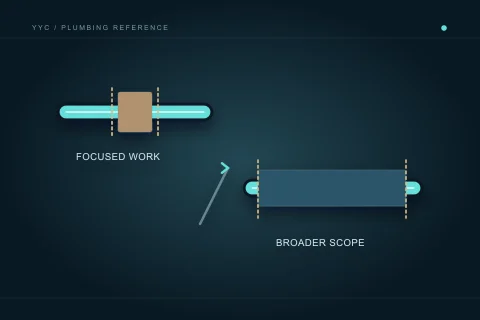
Identify fixture connections, branches, distribution, drainage or service work as applicable. Ask where the proposed work begins and ends and what remains retained or unassessed. A broad phrase such as “replace plumbing” should not be accepted as proof of a complete system renewal. A narrow repair can be valid when its purpose and limitations are clear.
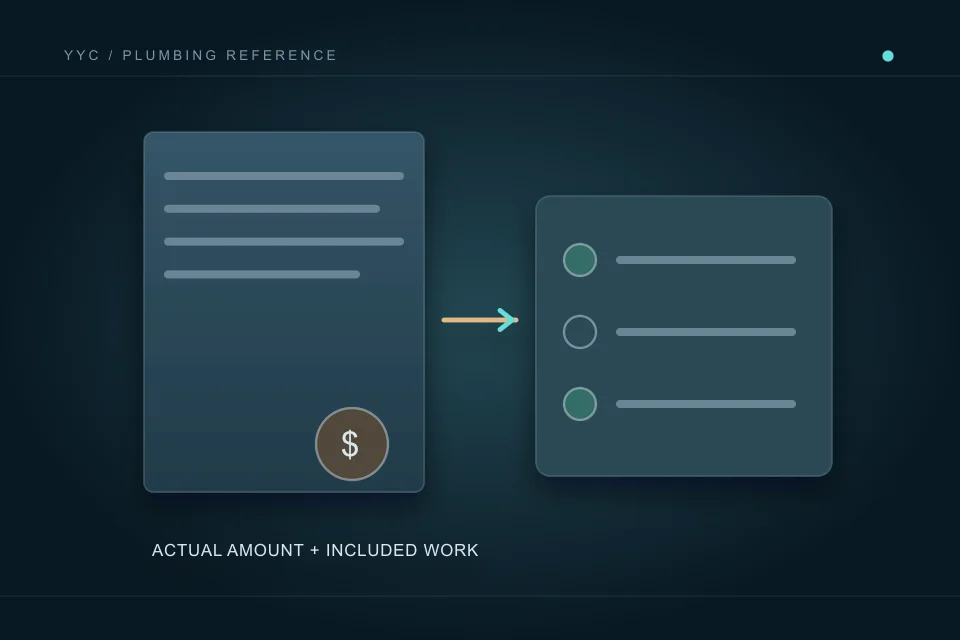
Check products, compatible parts and owner-supplied responsibilities. A retail price does not establish the installed scope. If an allowance is used, ask how actual selections change it. Keep assessment, labour, products and optional upgrades distinguishable where the proposal allows. The comparison should expose responsibilities rather than reduce every decision to a single dollar total.
Check the room work around the plumbing
Look for investigation openings, demolition, slab access, cabinetry, other trades and finish reinstatement. Ask who prepares and restores each affected area. One proposal may include significant room work while another stops at the pipe connection. The owner still needs a complete project plan, even if different parties legitimately carry different packages.
In a rental or condominium, clarify authority and shared-system access. The visible fixture location does not establish permission for all proposed work. Ask who arranges building shutdowns or attendance and whether those costs and delays are included. A visit date should not be mistaken for proof that every access and approval dependency is already arranged.
Identify permits, testing and result records
Calgary’s permit guidance distinguishes limited repair exceptions from construction, extension and alteration. Have the actual proposal reviewed against that process. Ask who applies, books, supplies access and retains results. A permit allowance should identify its relevant scope rather than imply all building or property approvals are included.
Testing and completion evidence should be assigned through the qualified process. The owner need not select technical methods to ask what record will be provided. Rough work, final installation and handover can be separate stages. A functioning tap or scheduled inspection is not complete evidence of every agreed deliverable, and retained piping should not be silently described as fully assessed.
Review payment, allowances and change terms
Use actual quoted amounts, currency and stated assumptions. Identify taxes where the proposal states them, payment milestones, provisional items and exclusions. Alberta’s contractor guidance supports clear written scope and payment terms. Do not add an invented market range to decide whether an unexplained total is fair; ask what the amount includes and compare equivalent work.
Agree the change process before discoveries occur. A proposed addition should state finding, options, affected scope, access, approvals, price and timing. A contingency amount is not automatic permission for unlimited work. For legal or consumer questions about the particular agreement, use appropriate official information or advice rather than treat a reference worksheet as contract approval.
Keep clarifications with the accepted version
Record answers to unresolved scope questions and attach them to the accepted proposal. Keep superseded versions clearly distinguishable. Name the follow-up contact and product or labour commitments. If something remains excluded, identify who will handle it. A complete decision record explains why the selected work fits the objective without claiming the contractor is guaranteed to produce a particular outcome.
For a human-reviewed request, send concise questions and relevant proposals with unnecessary private details removed. YYCPlumber does not select a contractor or guarantee acceptance. The useful output is a better-prepared conversation: known amount, defined work and unanswered details. Preserve the agreement and approved changes so later service or disputes can refer to evidence rather than memory.
Mark each worksheet item included, excluded or unclear. Send unclear items back as specific written questions rather than counting a blank response as agreement.
Questions people ask
Can the worksheet determine a fair market price?
No. It uses supplied information to expose scope gaps. Compare actual equivalent proposals and ask about unexplained differences.
Is an exclusion automatically unreasonable?
No. Different parties may handle different work. The issue is whether the whole project responsibility and budget are understood.
What should a change approval contain?
The finding, proposed action, affected scope, access, approvals, price and programme, documented through the agreed process.
Does a quote saying “complete” prove every pipe is included?
No. Ask for the start, end, retained work and assessment limitations. A broad adjective is not a defined installation boundary.
Sources and further reading
- Hiring a contractor ↗ · Government of Alberta. Checked 2026-10-02.
- Hiring a contractor ↗ · City of Calgary. Checked 2026-10-02.
- Homeowner electrical and plumbing permits ↗ · City of Calgary. Checked 2026-10-02.
Confirm the current requirements with the responsible authority for the actual address and work. This reference does not replace site assessment or an official decision.