Keep the original report and chronology
Save the initial symptom description, date, affected fixtures and urgency. Include direct enquiry or building reference numbers and relevant notices. Record what was happening when the issue appeared, without turning timing into a diagnosis. A brief chronology makes it easier to distinguish recurrence, a new symptom and changes after work.
Keep telephone notes factual: date, person or service contacted, what was reported and agreed next step. Separate your observations from comments provided by others. Do not collect unnecessary personal information or publish private messages. The record should support a focused review, not become a public accusation or an unsupported claim about who caused the event.
Ask for the actual finding and scope
Retain the service report or written description of what was assessed. Identify confirmed findings, likely explanations and areas not reviewed. A visit to one fixture does not establish the whole system’s condition. Ask the contractor to explain the proposed work boundary in plain language so later readers can tell what the recommendation was intended to resolve.
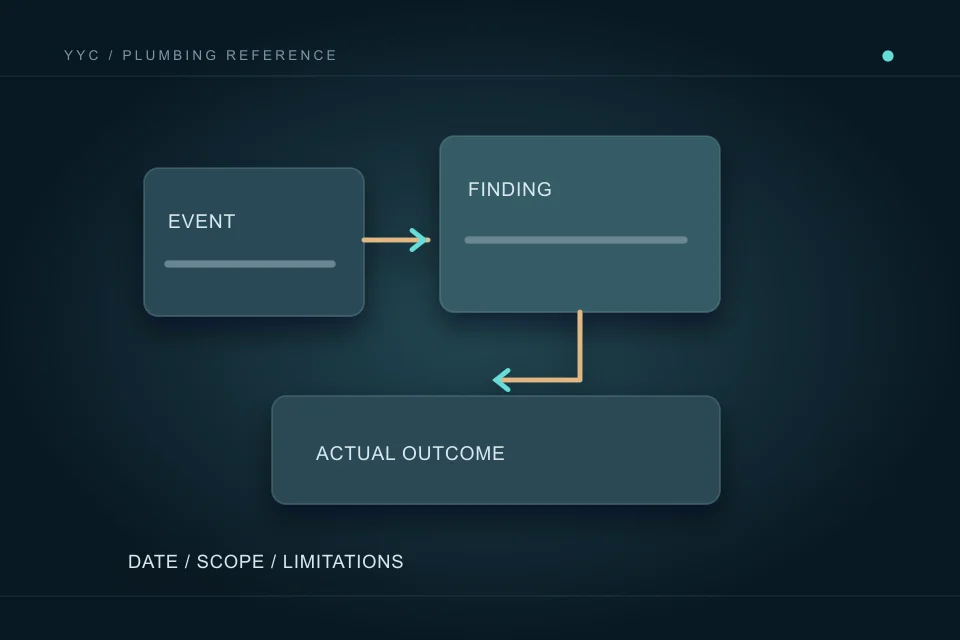
If inspection evidence is supplied, keep its date, context and limitations. An image without location or scope can be difficult to interpret later. Do not call a system certified merely because a contractor supplied photographs or clearing work succeeded once. The record should state its actual purpose rather than imply every concealed component was tested or approved.
Retain proposals and approved changes
Keep the accepted version of the quotation with written clarifications and changes. Mark superseded proposals clearly. Alberta’s contractor guidance supports clear scope, payment terms and approved changes. The final file should explain products, work boundaries, access, approvals, restoration and exclusions, not only the amount paid.
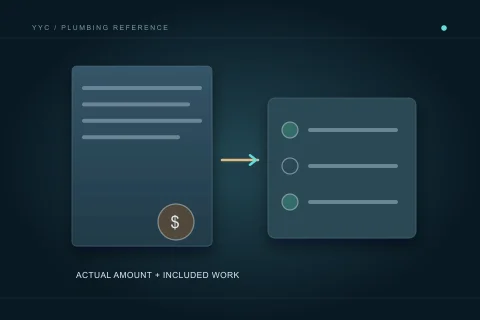
Connect each material change to the finding or owner decision that prompted it. Record actual amount and programme effects where agreed. A contingency balance does not explain the work performed without the scope record. For a later dispute or legal question, use the appropriate official process or advice; this reference does not determine liability from an invoice or message.
Record actual products and routes
Keep exact installed model information, manuals, invoices and warranty contacts. If products were owner supplied, retain purchase and installation responsibilities separately. Ask for actual route information where appropriate, with safe photographs before concealment. A conceptual drawing or early proposed route is not an as-built record when work changed on site.
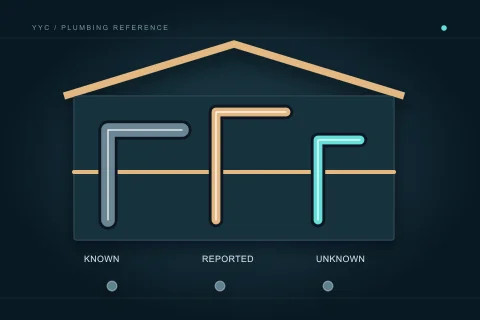
Mark retained piping, unassessed areas and future provisions explicitly. A capped connection should have its intended purpose and completed stage recorded, not be presented as suitable for any future use. Do not open finishes or dismantle equipment later simply to create a more complete file. A clear limitation is more honest and useful than invented certainty.
Save applicable results with their scope
Calgary’s permit guidance explains different trade approval stages and limited repair circumstances. Retain relevant permit references, results and correction records for the actual work. A scheduled appointment is not an approval result. Building, suite, property and trade authorizations can answer different questions, so preserve each separately where applicable.
Record ordinary owner-accessible controls and ongoing qualified maintenance responsibilities from the handover. Keep common-system, utility and service-only controls distinct. Testing records for specific devices belong with their actual identification and programme. An accessible valve or visible assembly does not establish every inspection or maintenance requirement has been completed.
Make the file easy to use and appropriately private
Organize by property, event and date, using clear names rather than one folder of unlabeled images. Retain originals and concise summaries where practical. Keep account numbers, keys, security information and personal contact details protected. A general request usually needs a limited relevant excerpt, not the entire household archive or an unredacted utility statement.
For follow-up, send the original symptom, actual finding, work completed and remaining decision. YYCPlumber provides human-reviewed requests, not property monitoring, certification or contractor endorsement. A useful record makes uncertainty visible and lets the responsible reviewer choose appropriate next assessment. It does not need to claim the home’s entire plumbing is permanently resolved to be valuable.
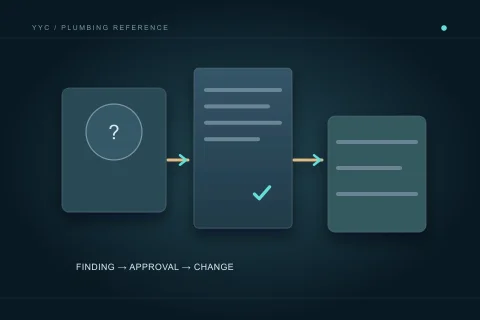
A one-page summary can link the original report, finding, accepted scope and actual outcome by date. Keep originals separately; the summary helps a new reviewer navigate evidence without replacing the underlying documents or overstating what they establish.
Questions people ask
Is an invoice enough to establish the work boundary?
Not if the description is vague. Keep the accepted scope, finding, actual work and limitations together, with clarifications where needed.
Should I upload all my property documents?
No. Provide relevant excerpts with unnecessary private details removed. Keep original account, security and personal information protected.
Do photographs replace inspection results?
No. They record routes and observations. Keep applicable actual approval results with scope and date separately.
What if old records are missing?
Mark the uncertainty honestly and describe available observations. A qualified review can decide what further assessment is needed; do not invent an approval or route history.
Sources and further reading
- Hiring a contractor ↗ · Government of Alberta. Checked 2026-10-02.
- Homeowner electrical and plumbing permits ↗ · City of Calgary. Checked 2026-10-02.
- Hiring a contractor ↗ · City of Calgary. Checked 2026-10-02.
Confirm the current requirements with the responsible authority for the actual address and work. This reference does not replace site assessment or an official decision.