Distinguish active water from a contained symptom
If water is entering the room, keep people away from unsafe wet areas and use the appropriate direct response. Do not keep flushing a fixture that is overflowing or recreate a leak for a photograph. Tell other occupants not to use the affected fixture. If an identified household control is accessible from a dry place, tell the responder where it is; do not force an unfamiliar valve.
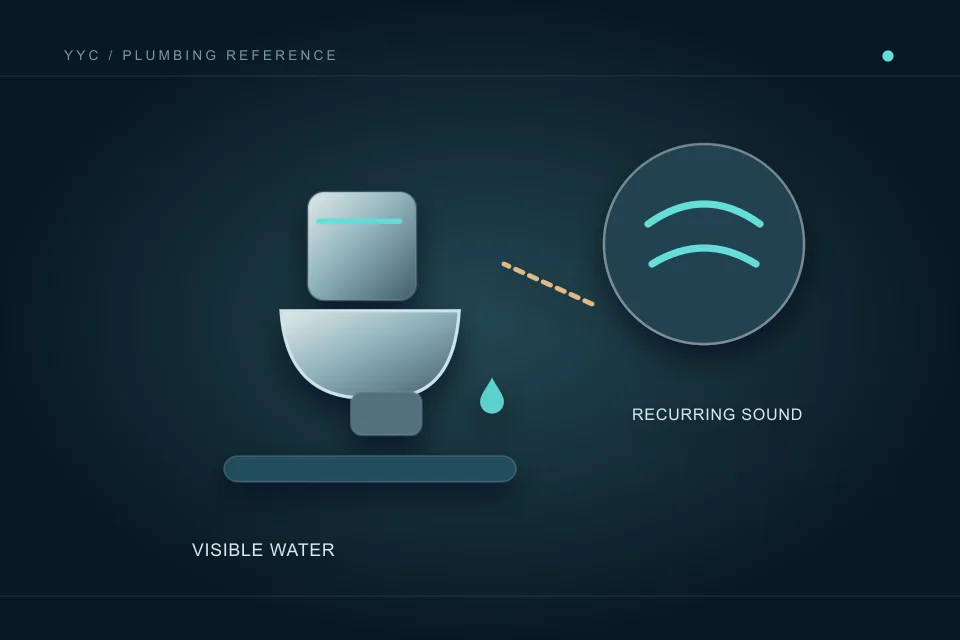
A recurring refill sound without visible overflow can be less immediate but still deserve review. Record whether it happens between ordinary uses and whether the sound comes from the fixture or a wider supply area. Those facts do not certify a particular internal part has failed. The urgency depends on continuing water, safe access and the actual effect on the property.
Record where water or moisture appears
Describe whether moisture is at the floor, beside the fixture, on the supply area or on the ceiling below. Water near a toilet can have several routes, and its location alone does not establish the failed connection. Take a safe overall photograph and note whether the condition is steady, occasional or linked to ordinary use.
Do not lift the fixture, tighten fittings or open finishes for an online report. A stain below the room may need broader investigation. If the bathroom was recently altered, provide the work date and relevant invoice or product information. Keeping the observation and installation history together helps a qualified reviewer plan the assessment rather than assume that proximity proves the source.
Document recurring use without opening the tank
Record the timing of sounds: immediately after use, intermittently while unused, or continuously. Note whether the household’s water consumption also changed and whether other automatic uses could be relevant. A sound can support an enquiry, but it does not establish the amount of water lost or the condition of an inaccessible component.
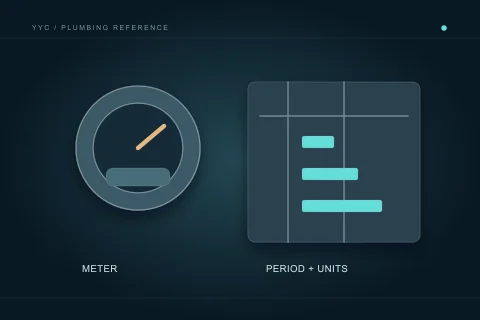
The City’s meter guidance explains the metered system and contact route for meter concerns. A safely observed small water rate can be entered in the worksheet, but do not provoke leakage or dismantle a toilet to measure it. A constant-rate estimate is conditional arithmetic, not a forecast of the bill or a remote diagnosis of the fixture.
Keep drainage symptoms in their own branch
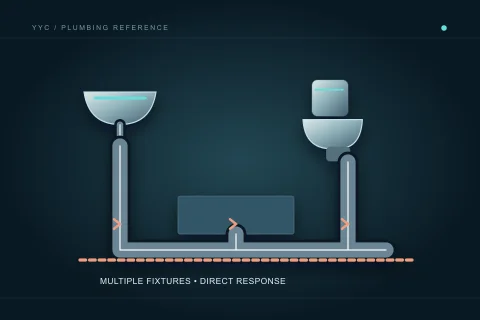
Slow clearing, gurgling and a backup need a drainage review rather than an assumption that the supply parts are responsible. Note whether another fixture is also affected and whether symptoms appear when water is used elsewhere. Avoid repeated flushing into a suspected blockage. Multiple-fixture backup and sewage exposure require the appropriate direct response and safe separation from the area.
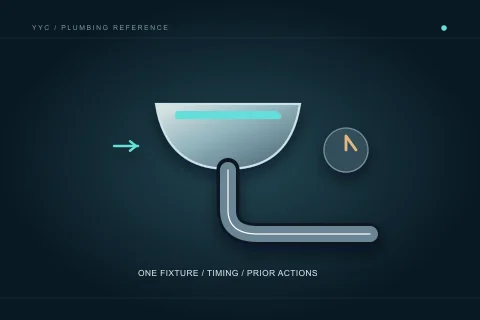
Tell the reviewer what products or interventions have already been used, without repeating them. Chemical products and mixed remedies can create risks for occupants and responders. This reference does not provide drain-opening or sewage cleanup instructions. A clear account of the affected fixtures and prior actions helps the qualified service assess the scope safely.
Compare a repair proposal with replacement scope
Ask what finding supports the recommendation, whether the work addresses one component or the entire fixture and what limitations remain. Age or appearance alone is not a diagnosis. If replacement is proposed, identify the actual model, installation compatibility, removal, testing and any finish or access work. A retail product price is not the complete installed scope.
Calgary’s permit guidance distinguishes some existing fixture replacement and limited repairs from altered plumbing. Have the actual proposed work checked rather than deciding from the word “toilet.” For rental or condominium property, coordinate authorization and shared responsibilities before commissioning work. Keep the commercial approval separate from the technical assessment.
Retain the outcome and remaining limitations
Keep the service finding, work performed, installed product or component information and any follow-up recommendation. Record whether the original symptom changed under ordinary use and whether any restriction remains. Do not describe a single successful flush as proof that every possible leak or drainage condition has been resolved. Ask what observation should trigger further contact.
For a human-reviewed request, provide the symptom, location, timing, active-water status and other affected fixtures. YYCPlumber does not dispatch an emergency contractor or certify a fixture from pictures. A factual brief lets a person consider the next step without asking you to open the toilet, disturb connections or repeatedly reproduce a damaging event.
Questions people ask
Does a recurring refill sound prove a specific part failed?
No. It is a useful observation, but the actual fixture needs assessment. Record the timing without treating an online explanation as a diagnosis.
Should I keep flushing to see whether the blockage clears?
Do not repeatedly use an overflowing or suspected blocked fixture to gather evidence. Restrict use and report the drainage pattern to the appropriate service.
Is a new toilet always better than repair?
That depends on findings, parts, condition, installation and the owner’s objectives. Ask for the rationale and complete scope of each proposed option.
Can I calculate the bill from a toilet sound?
No. The sound does not establish a measured rate. Even a supplied rate gives only a constant-use example, not a bill prediction.
Sources and further reading
- Water meters ↗ · City of Calgary. Checked 2026-10-02.
- Homeowner electrical and plumbing permits ↗ · City of Calgary. Checked 2026-10-02.
- Basement flooding and seepage ↗ · City of Calgary. Checked 2026-10-02.
- Hiring a contractor ↗ · Government of Alberta. Checked 2026-10-02.
Confirm the current requirements with the responsible authority for the actual address and work. This reference does not replace site assessment or an official decision.