Compare comparable periods and units
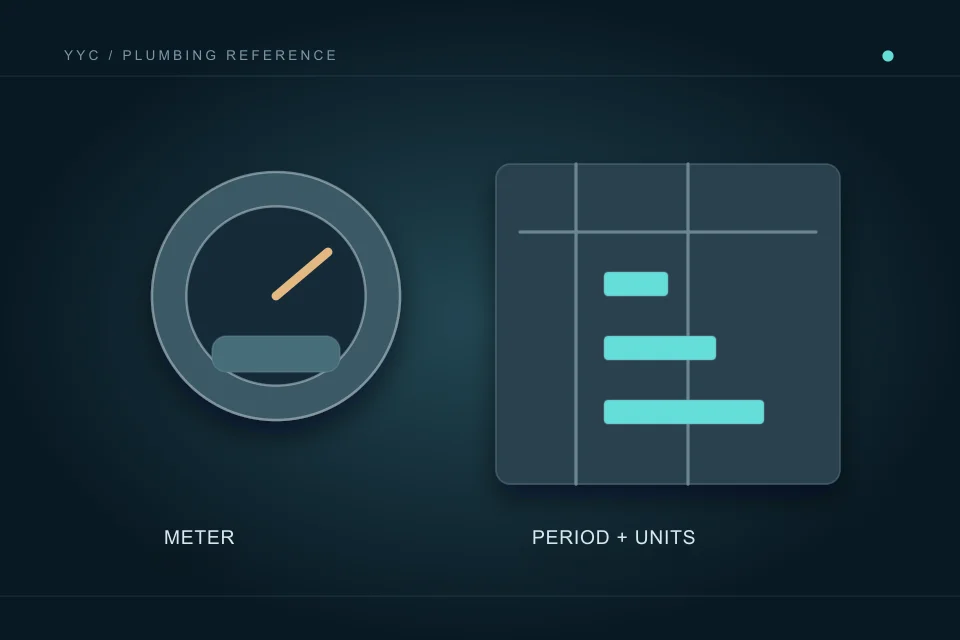
Gather the relevant statement dates, measured consumption and units. A longer period can have more total use without a higher daily rate. Record occupancy, visitors, irrigation or equipment changes where known. Keep rates, taxes and other charges distinct from consumption. A total dollar difference alone is a poor starting point for deciding a plumbing scope.
Do not send account passwords or an unredacted full statement through a general request. A brief can state dates and units with identifying details limited to what the responsible service needs. Ask the utility’s customer-service process about billing questions. The site does not audit an account, predict credits or guarantee that a repair will produce a particular bill reduction.
Use the City’s meter information
Calgary’s water-meter guidance explains the system and how to raise meter service concerns. Gather safely available records and accessible observations without tampering with the meter or operating unfamiliar controls. A moving indication is not by itself proof of a defective meter, and a quiet fixture does not establish that all automatic use is stopped.
If you make an ordinary safe observation, record its time and conditions: which known uses were inactive and which equipment may still operate. Do not isolate shared services or dismantle components to create a “zero-use test” for this form. Ask the responsible qualified or City service what information is appropriate for the actual concern.
Inventory plausible water uses without guessing a rate
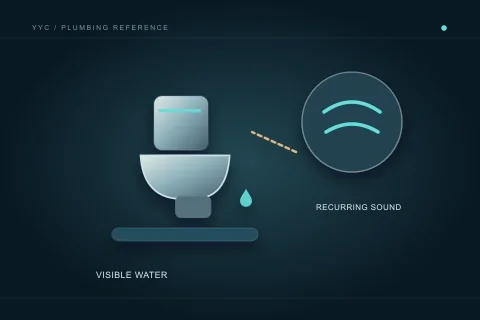
List toilets, taps, laundry, irrigation and known water-using equipment. Note recent changes and any visible or audible symptom. An automatic cycle or recurring fixture sound can be relevant without establishing its volume. A household inventory helps the reviewer choose a focused assessment instead of assuming a buried pipe must be responsible for every unexplained total.
Keep uncertain uses marked unknown. Do not turn a fixture count into a calculated household bill. Consumption depends on actual use and conditions. If a visible leak is active, address its urgency through the direct response rather than wait to complete an inventory. The record should support assessment while avoiding new damage or unsafe access.
Keep small-drip arithmetic conditional
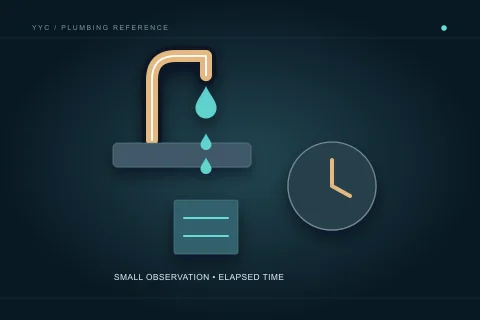
The worksheet uses observed millilitres divided by elapsed minutes, converts to litres per day and gives a 30-day example. It assumes that the supplied rate remains constant. Collect only a small accessible observation that can be made safely; do not recreate a leak or leave water running to obtain a number. An unmeasurable symptom can simply be described.
Keep the inputs, date and assumptions with the result. A calculated example is not measured whole-property consumption and does not prove a hidden source. Rates can vary, and the billing period may differ from thirty days. Use the arithmetic to illustrate scale for a review, without promising financial savings or claiming that every difference in the statement has been accounted for.
Choose the question before approving work
For meter or billing concerns, use the City’s contact route. For a household fixture or suspected private leak, ask a qualified plumber about a defined assessment. Exterior signs may also need the service-line leak enquiry process. Do not select a replacement boundary from consumption data alone. Ask what finding supports the recommended work.
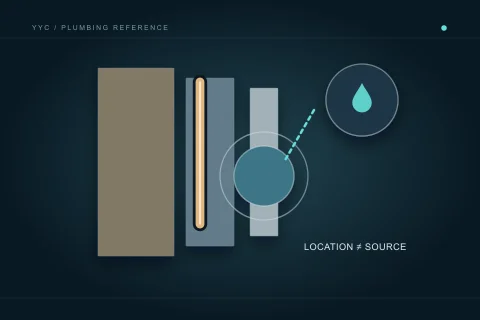
A proposal should separate investigation, access, repair and restoration. If work expands into altered piping, confirm the applicable approval process. In a rental or condominium, coordinate responsibility and access through the designated party. The location of a bill or fixture does not establish who owns every connected component or can authorize changes.
Follow the evidence after action
Save the enquiry, assessment, work description and any ordinary-use observations after service. Compare later periods with their dates and units, acknowledging occupancy and other changes. A decrease can be informative without proving the exact contribution of one repair. Ask what remains unresolved and which party should receive further information.
For a YYCPlumber request, state the period, observed symptom, relevant use changes and decision needed. A human review is not an account audit, meter certification or guaranteed contractor visit. The next step should follow the actual evidence. Keeping financial questions, measured use and physical symptoms separate prevents a large bill from automatically becoming an unsupported pipe-replacement recommendation.
Questions people ask
Does a higher bill prove a hidden leak?
No. Compare consumption units, period length and use changes, and separate charges from measured use. A qualified enquiry may then be appropriate.
Can the worksheet predict my next bill?
No. It gives a constant-rate water-volume example using supplied observations, not tariffs, actual whole-property use or a bill forecast.
Should I tamper with the meter to check it?
No. Use Calgary’s meter contact process and safe available observations. Do not dismantle or alter meter equipment.
What makes a plumbing recommendation credible?
A defined assessment and finding connected to the proposed work boundary, with access, approvals, limitations and restoration explained.
Sources and further reading
- Water meters ↗ · City of Calgary. Checked 2026-10-02.
- Water service line leaks in Calgary ↗ · City of Calgary. Checked 2026-10-02.
- Homeowner electrical and plumbing permits ↗ · City of Calgary. Checked 2026-10-02.
- Hiring a contractor ↗ · Government of Alberta. Checked 2026-10-02.
Confirm the current requirements with the responsible authority for the actual address and work. This reference does not replace site assessment or an official decision.