Describe the source you can actually see
State whether drops leave the spout, appear around the base, collect below the sink or emerge near an accessible connection. Take a safe overall photograph and a close view without moving equipment or reaching into wet electrical areas. Record whether water is present when the fixture is unused. Do not describe a visible drop as proof of a failed internal part.
If water is escaping onto finishes or into a cabinet, reassess urgency and contact the responsible direct service. A contained spout drip is different from continuing damage. Tell other occupants about any use restriction. If an accessible household control is already known, report its location to the responder, but do not force a valve or disturb connections to make the report more complete.
Collect product information from existing records
Use the model, installation date or manufacturer information already available. A visible logo may help, but many product families have different components. Do not disassemble the faucet to identify a cartridge for this request. A missing model can be marked unknown, with photographs supplied for a qualified reviewer to consider.
Include whether the fixture was recently installed, serviced or affected by other plumbing work. Product warranty and installation labour commitments are separate matters. Keep the original invoice and any prior service report so the responsible party can clarify the correct follow-up. An internet part that resembles the installed component is not evidence of compatibility.
Use a water estimate only where safe
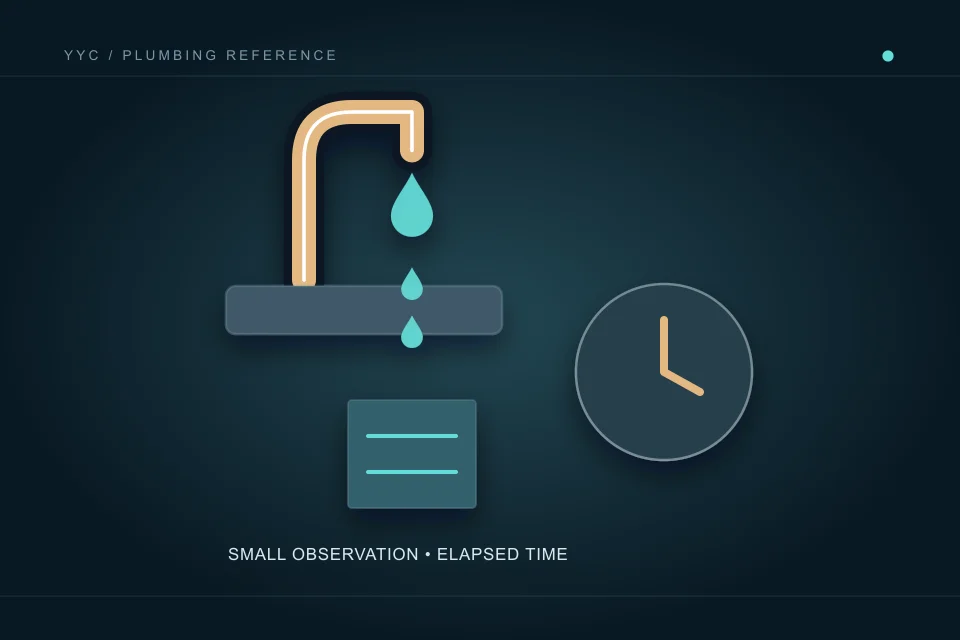
For a small drip that can be collected safely without causing damage, record the observed millilitres and elapsed minutes. The worksheet estimates litres per day and a 30-day example assuming that rate continues. Do not create leakage, leave a fixture unattended or collect water from an unsafe connection. If collection is impractical, a simple description is sufficient.
The estimate does not locate a hidden leak, predict a bill or establish that the rate remains constant. Water-use patterns can change, and measured consumption includes other fixtures and equipment. Use the result as a dated observation for the review. Keep the container volume, observation period and assumptions with the number rather than sending a bare daily total.
Note hot, cold and operating conditions
Describe whether the drip appears after hot use, cold use, both or while unused. Note any unusual sound, handle movement or change in delivered flow that is already apparent under ordinary safe use. Do not operate the fixture repeatedly to force the symptom. These observations help define the question but cannot establish the condition of concealed parts.
If several fixtures show a simultaneous supply change, use the wider-pattern guide rather than treating each faucet as an isolated defect. A local drip and a household pressure concern may coexist. Ask the assessor what finding supports the recommended work and whether another system issue needs separate review. Keep unrelated symptoms from disappearing into a fixture-only quotation.
Compare repair and replacement by the full scope
A repair proposal should identify the assessed issue, compatible component and expected limitation. A replacement proposal should name the selected product, connections, access, removal and testing. Neither a cheap part nor a retail faucet price establishes the completed cost. Ask about product availability and whether the recommendation resolves the original symptom or simply changes the appearance.
Calgary lists limited repairs and some existing fixture replacement separately from construction, extension and alteration in its permit guidance. If the proposed work expands or relocates connections, have that actual scope reviewed. In a rental or condominium, establish approval through the responsible party before commissioning permanent work.
Keep a short outcome record
Save the work description, installed model or part information, invoice and any relevant warranty response. Ask what follow-up is needed if the drip recurs and whether any observed moisture needs separate assessment. Do not conceal damage behind stored items because the visible outlet drip stopped. The fixture repair and restoration of affected materials are distinct tasks.
For a YYCPlumber request, state the observed location, active-water status, safe rate if measured, known model and previous work. A person reviews requests, but submission does not book attendance or guarantee a repair price. The brief should identify the decision you need help preparing without implying that photographs certify a fixture or authorize a particular component replacement.
Questions people ask
Does a dripping outlet prove which internal part is needed?
No. The actual product and condition need assessment. Do not buy a similar-looking component as if appearance establishes compatibility.
What units does the water-use tool use?
Observed millilitres over elapsed minutes, converted to litres per day and a 30-day example. The result assumes the observed rate continues.
Is cabinet moisture the same as a contained spout drip?
No. Water entering finishes or hidden spaces can require a different urgency and investigation. Describe the visible location and whether it continues.
Should replacement be quoted as only the retail faucet?
No. Compare the actual product, installation, access, accessories, removal, testing and exclusions in the complete written scope.
Sources and further reading
- Homeowner electrical and plumbing permits ↗ · City of Calgary. Checked 2026-10-02.
- Water meters ↗ · City of Calgary. Checked 2026-10-02.
- Hiring a contractor ↗ · Government of Alberta. Checked 2026-10-02.
Confirm the current requirements with the responsible authority for the actual address and work. This reference does not replace site assessment or an official decision.