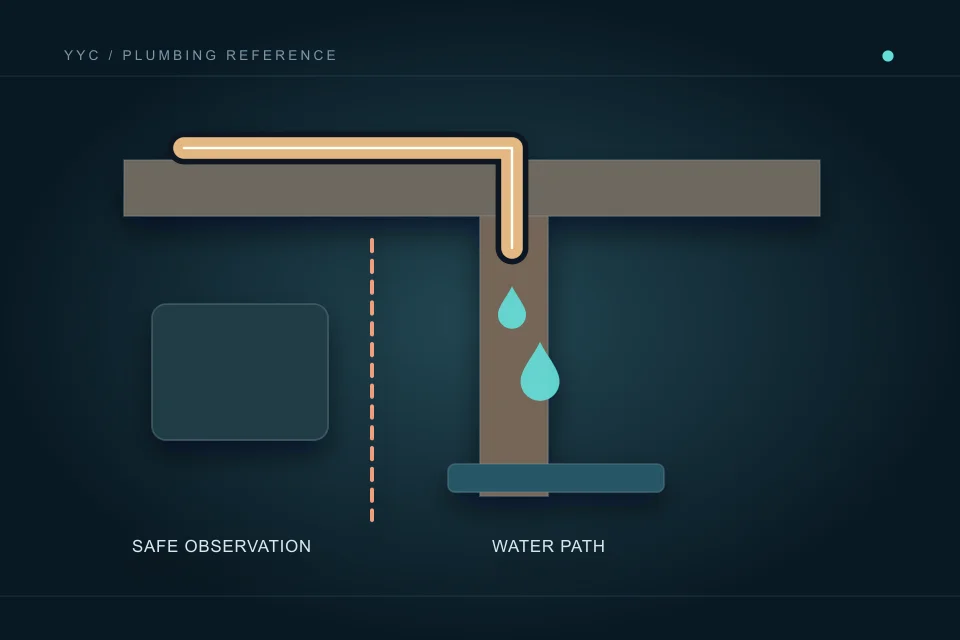
Make the affected area safe to avoid
Keep people away from wet electrical equipment, damaged ceilings and standing water. Do not remove a light fitting, open an electrical panel or enter a flooded basement looking for the source. A ceiling can retain water above the visible stain; do not stand underneath sagging materials. If the situation involves life safety, use emergency services and follow their instructions.
For a clearly accessible household shut-off you already know, tell the responder its location and whether it can be reached from a dry area. Do not force a stuck valve or operate a street valve. In a managed building, the person responsible for shared isolation may be the manager or maintenance team. Safe access and an identified valve matter more than a guessed repair.
Describe both the visible water and possible route
Record the room, level and surface where water appears: for example, the ceiling below a bathroom, beside a toilet base or along a basement wall. Distinguish a steady stream, occasional drops and a damp patch that is expanding. If safe, describe which fixtures were being used immediately before the event. Keep the observation separate from an assumed broken pipe.
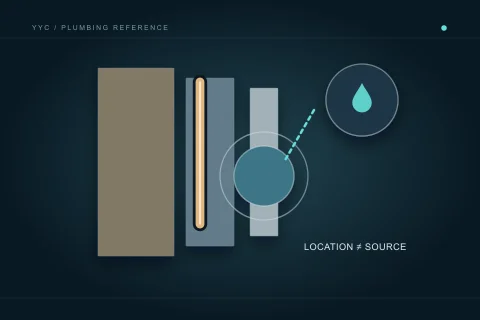
Water can travel along joists, pipework and finishes before becoming visible. The nearest fixture is not automatically the source. Photographs of the overall room, the wet area and any safely visible connection help a professional plan access. Do not open finished surfaces simply to improve an online report. The assessment should decide what access is necessary and who authorizes it.
Record what changes the leak
Note when you first saw water and whether it continues with fixtures unused. A leak that appears only during drainage is a different clue from one that remains constant, but neither observation proves a particular component failed. Do not keep using the fixture to repeat the event. Tell other occupants about any temporary restriction and record what was already operating when the leak began.
Weather and building conditions also matter. Roof or exterior water, condensation and groundwater can resemble plumbing leakage. Give the responder the timing of rain, snow melt or unusual indoor humidity if relevant. A useful chronology is short: first noticed, last fixture use, isolation or usage restriction, and the current condition. This prevents competing guesses from replacing the facts.
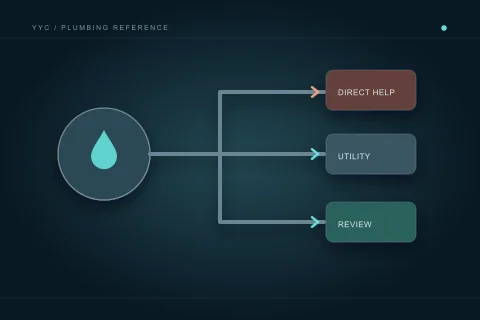
Coordinate the household, building and utility contacts
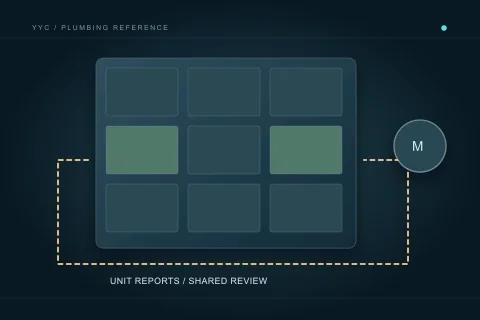
For a rental or condominium, use the property’s maintenance or emergency contacts promptly. Shared pipes and shut-offs may serve more than one unit. Tell the manager if the leak is entering another suite or common space. For a detached home, a qualified plumber can assess household plumbing; suspected service-line leaks may also require City involvement.
The City’s water service-line leak guidance describes signs such as unexplained water, noise and pressure change, and how City locating assistance fits the process. Do not assume every exterior wet patch is the owner’s pipe or that a City visit completes private repairs. Record who was contacted, any reference number and the scope each party agreed to assess.
Separate immediate control from permanent work
Ask the responder to identify the immediate control action, the likely assessment needed and the proposed permanent repair as distinct steps. A temporary stop, a visible fitting replacement and restoration of damaged finishes are different deliverables. Confirm who will inspect hidden areas, who will handle drying or contamination and what remains excluded from the plumbing appointment.
If assessment reveals altered piping or a larger replacement, ask about permit responsibility before the scope expands. Calgary’s permit guidance distinguishes limited repairs from construction, extension and alteration. Do not treat an emergency call as blanket authorization for every later improvement. Written approval should identify changed scope, access, price and the party responsible for reinstating finishes.
Keep a usable record after the water stops
Save photographs with times, messages to the responsible party, the service report and any approved change. Ask for a description of what failed, what was repaired and whether further assessment is recommended. Keep product and warranty details if a component was replaced. A receipt saying only “leak fixed” gives little help if a related symptom appears later.
Record whether normal fixture use has been restored by the responsible professional and whether any area remains restricted. Do not conceal an unresolved wet area because the visible drip stopped. For a later human-reviewed request, explain what has already been done and what decision remains. YYCPlumber does not certify completed repairs or promise an emergency visit from an online submission.
Questions people ask
Can the visible stain identify the exact leak source?
No. Water may travel through building materials. Describe the visible location and timing; access and inspection are needed to establish the source.
Should I tighten a connection before sending a photograph?
This reference does not direct repair attempts. Avoid disturbing a leaking or unfamiliar connection. Provide safe observations and let a qualified person determine the appropriate work.
Does every leak repair need a plumbing permit?
Calgary lists limited leak repair among exceptions, while new construction, extension and alteration require permits. Have the proposed scope checked rather than deciding from the word “leak” alone.
What should the invoice describe?
The assessed condition, repaired component or pipe section, access, remaining limitations and any follow-up. Keep separate records for damage restoration and plumbing work.
Sources and further reading
- Basement flooding and seepage ↗ · City of Calgary. Checked 2026-10-02.
- Water service line leaks in Calgary ↗ · City of Calgary. Checked 2026-10-02.
- Homeowner electrical and plumbing permits ↗ · City of Calgary. Checked 2026-10-02.
Confirm the current requirements with the responsible authority for the actual address and work. This reference does not replace site assessment or an official decision.