Do not classify suspected gas through a form
If you suspect gas or another life-safety condition, use the applicable direct emergency process and follow the responder’s instructions. Do not stay in an unsafe area to decide whether the smell is “really plumbing.” The City’s safety guidance identifies gas odour as an emergency concern in flooding contexts. An online description cannot establish the substance or its risk.
Keep people away from sewage, standing water and suspect equipment. Do not open a drain or operate powered equipment to investigate an odour. A person reviewing a routine request cannot monitor the property or guarantee immediate attendance. Safety decisions must follow the current condition and the appropriate direct services, rather than the label chosen on a reference page.
Record the apparent source carefully
Describe whether the odour is noticed from the water itself, near a drain, under a cabinet, in one room or across the property. Note hot versus cold where ordinary safe observation provides that distinction. Do not repeatedly recreate exposure or run water into a suspected backup. A statement about the apparent location is useful, while a declared pipe failure is premature.
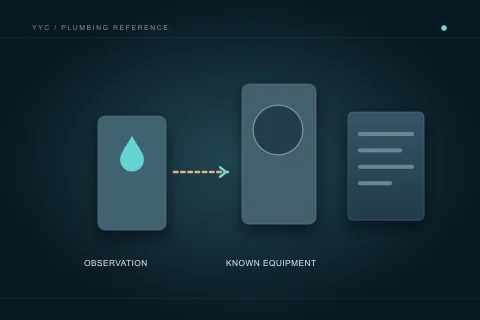
Record timing: after ordinary use, after an absence, during rain or throughout the day. Include recent work, cleaning products and recurring drainage symptoms. Keep “I observed” separate from “someone suggested.” This allows the reviewer to ask a focused next question instead of starting with an assumed drain cause that may not fit the actual pattern.
Use the City’s water-quality information where relevant
Calgary’s taste, odour and appearance guidance describes common water observations and how to raise questions with 311. It explains examples such as seasonal earthy qualities, but a general explanation does not certify every unfamiliar case. Report the actual location, hot/cold pattern and current change to the City where utility water quality is the concern.
If the odour appears only at one fixture or near a drain, tell the reviewer that limitation. Water and drain observations can differ even at the same sink. Do not assume boiling, filtering or a chemical additive will address an unknown condition. Follow current official advice for any specific notice and obtain appropriate assessment for installed treatment equipment.
Keep trap and vent concepts at the right level
Trap seals and venting are drainage-system concepts described in the national model code. They help explain why drainage design matters, but they do not diagnose an odour remotely. Do not infer that a concealed trap or vent is absent because it cannot be seen. A qualified assessment needs the actual arrangement and symptom history.
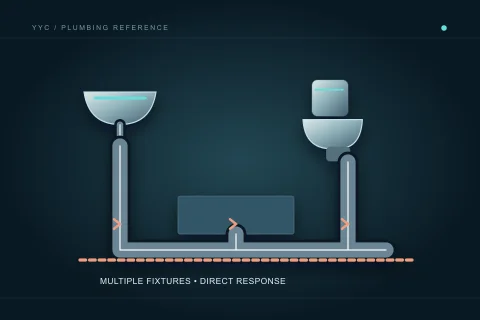
Report gurgling, slow clearing, backups or recent fixture moves as separate observations. Avoid opening piping, mixing cleaning products or altering a vent to test an explanation. If wastewater is entering the space, switch to the direct backup response. A routine odour review and an active sewage event have different urgency and service requirements.
Coordinate the property review
For a rental or condominium, notify the designated maintenance contact or manager with a factual report. Shared drainage or water systems may need wider access and observations. One suite’s odour does not establish the responsible pipe boundary. Ask who will assess the issue and what permission is needed before any destructive investigation or work on common systems.
Keep prior reports and any current City enquiry reference. A proposal should distinguish assessment from treatment, repair or replacement. Ask what finding supports the recommended action and what remains uncertain. Do not authorize broad pipe replacement from an odour description alone or assume that a product sold as a deodorizer resolves the underlying condition.
Make the outcome and remaining question visible
Retain the finding, actions taken and whether the original pattern changed under ordinary use. If no cause was confirmed, record that honestly. An inconclusive review can still narrow the next assessment, but it should not become a claim that the entire system is safe or compliant. Ask what observation would justify further contact and which party handles it.
For a YYCPlumber request, state the apparent location, timing, related symptoms and direct contacts already used. A person reviews requests, but the site does not certify water, identify gases or guarantee a contractor response. The goal is a useful next-step brief, with safety and utility enquiries kept in the appropriate direct channels.
Questions people ask
Does a smell near the sink prove a drain fault?
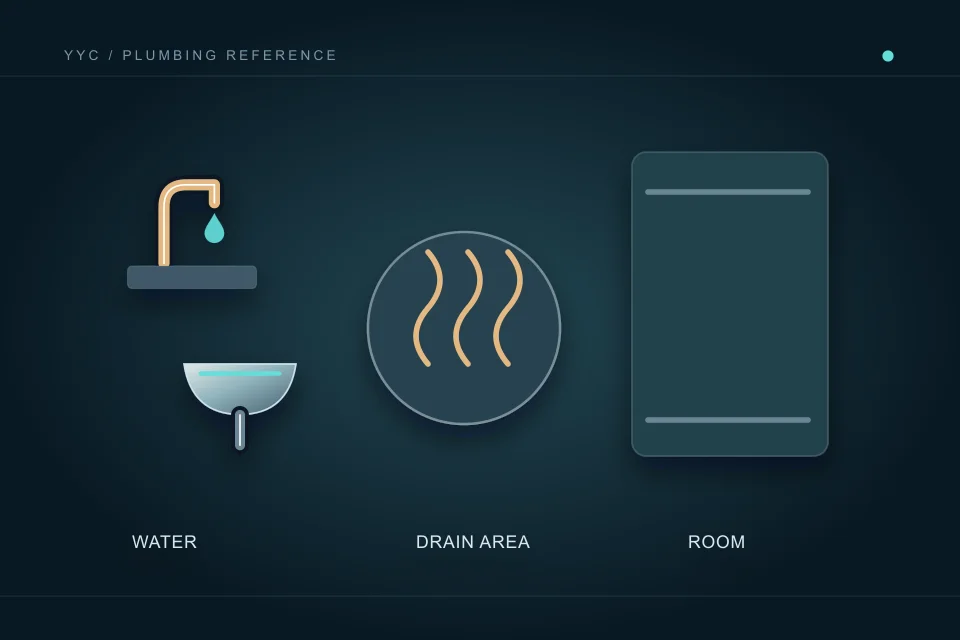
No. Describe whether it seems related to water, the drain area or the room. A qualified review is needed to establish the actual source.
Can the site tell whether a smell is gas?
No. Use direct emergency procedures for suspected gas or unsafe conditions. Do not remain in the area to classify it through a form.
Should I mix drain products to remove the odour?
No product-treatment instructions are provided. Avoid mixed remedies and disclose products already used to the responder.
Does a common City explanation certify my water?
No. General information explains possibilities. Use current notices and 311 for the actual water-quality question, particularly when the condition is unfamiliar.
Sources and further reading
- Drinking water — Taste, odour and appearance ↗ · City of Calgary. Checked 2026-10-02.
- National Plumbing Code of Canada 2020 ↗ · National Research Council Canada. Checked 2026-10-02.
- Basement flooding and seepage ↗ · City of Calgary. Checked 2026-10-02.
- Sewage backups ↗ · City of Calgary. Checked 2026-10-02.
Confirm the current requirements with the responsible authority for the actual address and work. This reference does not replace site assessment or an official decision.